
Assalamu alaikum wa rahmatULLAHI wa barakatuhu
Welcome to Yusufi Publishers
Discover the Light within the Pages: Your Gateway to Islamic Wisdom...
🚚 Free delivery all over India on all orders above ₹1500/-
Assalamu alaikum wa rahmatULLAHI wa barakatuhu
Welcome to Yusufi Publishers
Discover the Light within the Pages: Your Gateway to Islamic Wisdom...
🚚 Free delivery all over India on all orders above ₹1500/-

₹300.00
In stock
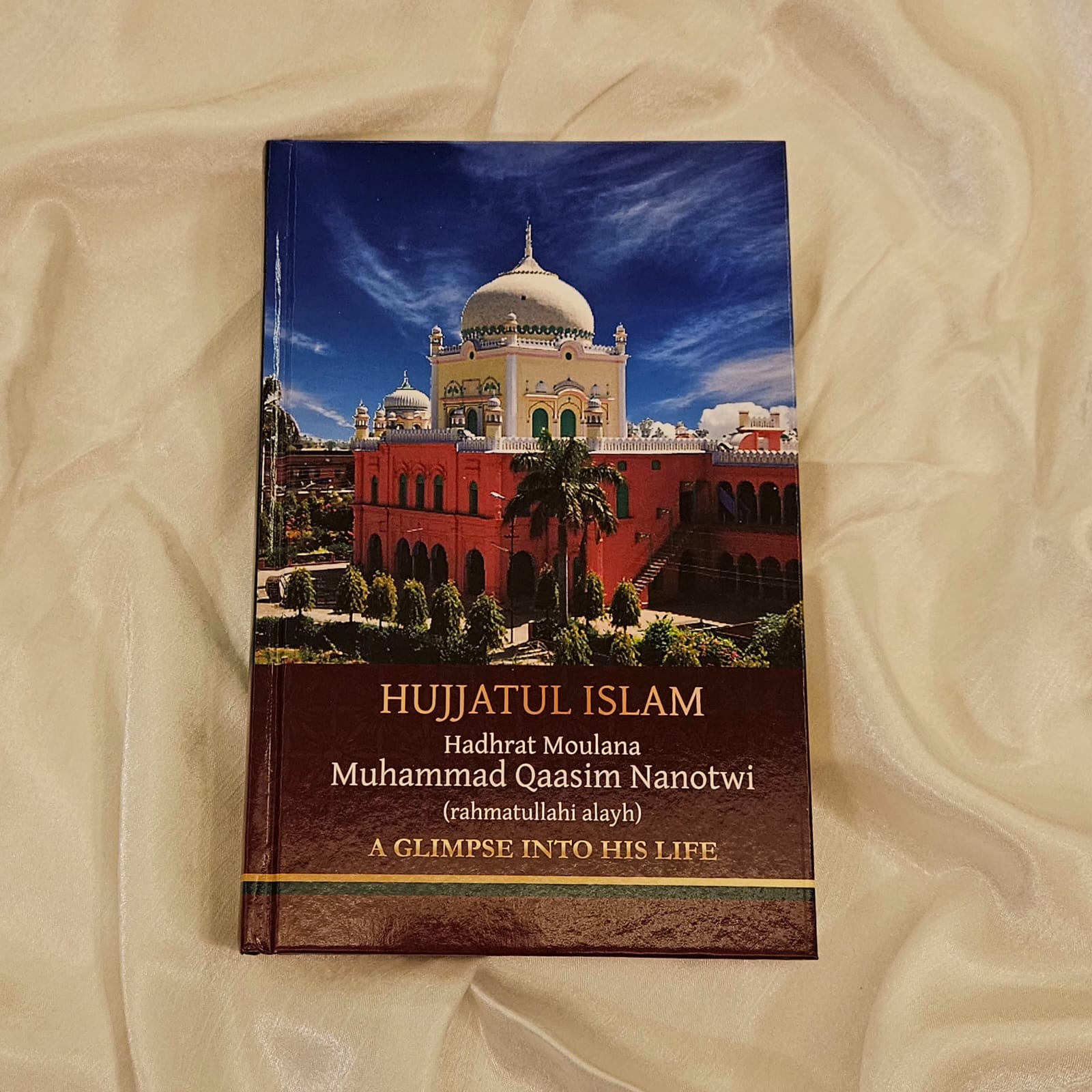
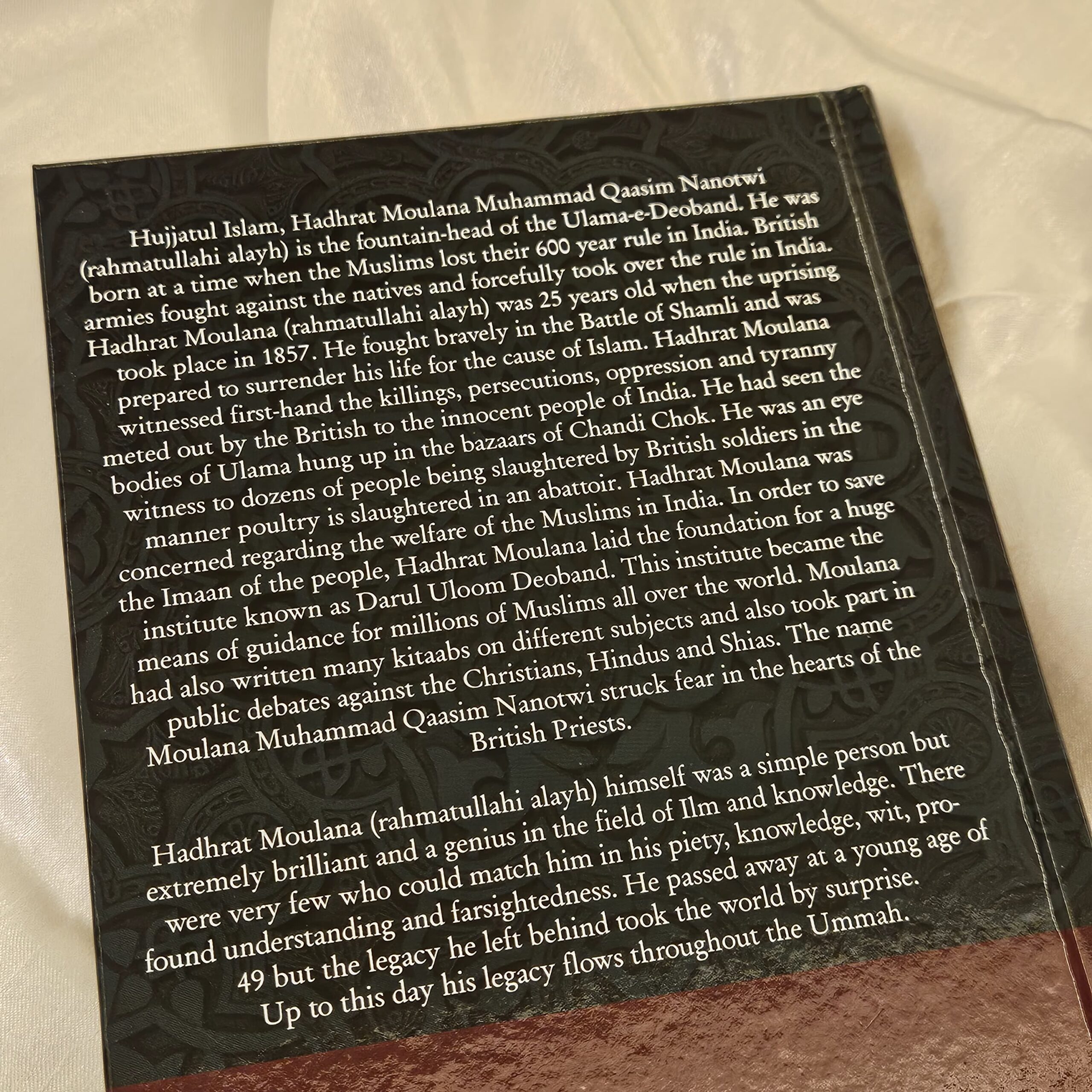
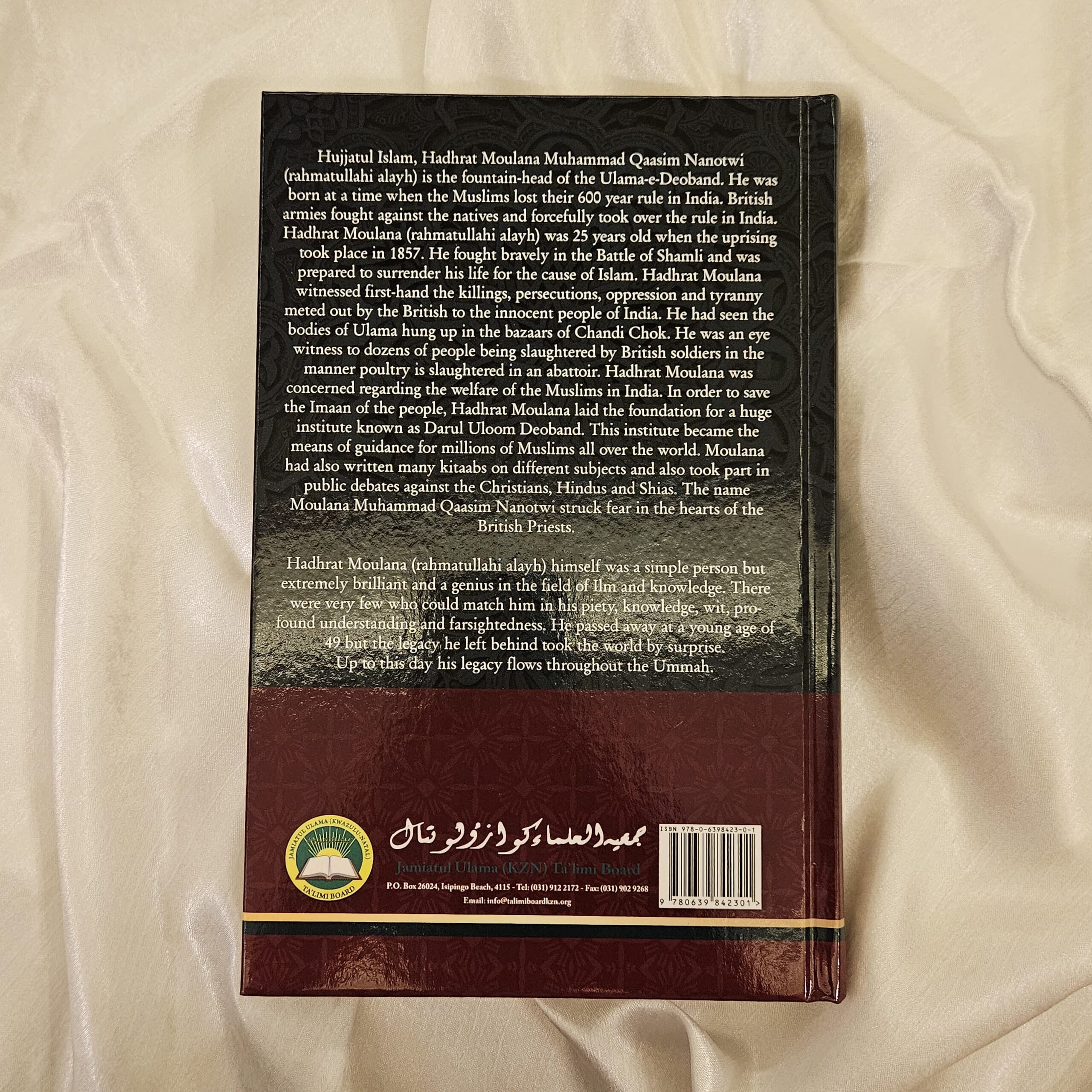
Hujjat al-Islam Maulana Muhammad Qasim Nanawtawi (rahimahu Allah)
One of the Most Esteemed Personalities in Islamic History
Maulana Muhammad Qasim Nanawtawi (rahimahu Allah) stands as one of the most influential scholars and reformers of nineteenth-century India. His services to Islamic knowledge, institutional revival, and resistance to colonial threats laid foundations that continue to benefit the Muslim Ummah worldwide.
His name was Muhammad Qasim, while his historical name was Khurshid Hussain. He was the son of Asʿad ʿAli and the grandson of Shaykh Ghulam Shah. His lineage traces back to Qasim ibn Muhammad ibn Abi Bakr (radiya Llahu ʿanhu), linking him to a noble and scholarly heritage. He was born in 1248 A.H. (1832) in Nanawta, a town near Deoband, and passed away on Thursday, 4 Jumada al-Ula 1297 A.H. (1879) after Zuhr salah.
Nanawta, his hometown, had long been a center of Islamic influence. His ancestor Maulana Muhammad Hashim (rahimahu Allah) was closely associated with the Mughal Emperor Shah Jahan and played a major role in transforming Nanawta into a flourishing Islamic town. It was from this environment that Maulana Qasim Nanawtawi emerged as a guiding light for the Ummah.
From childhood, signs of exceptional brilliance were apparent. He once saw a dream that was interpreted by his grandfather as a sign that Allah would grant him immense knowledge and widespread recognition. His intelligence, courage, diligence, and quick comprehension distinguished him from his peers, and he consistently excelled in his studies. He also had an early love for poetry and literary expression.
His formal education began in Nanawta and continued in Deoband and Saharanpur before he traveled to Delhi in 1259 A.H. There, under Maulana Mamluk ʿAli (rahimahu Allah), he completed advanced studies in Arabic grammar and other sciences within five years. He studied Hadith under the renowned Shah ʿAbdul Ghani Mujaddidi (rahimahu Allah). His intellectual capacity was extraordinary; he could comprehend complex philosophical texts with remarkable ease. Alongside academic training, he underwent spiritual reformation under Haji Imdadullah al-Makki (rahimahu Allah), emphasizing purification of the soul.
Despite his vast knowledge, Maulana Nanawtawi was deeply humble. He disliked titles, praise, and public recognition, preferring simplicity and anonymity. He was informal and affectionate with his students, treating them as companions rather than subordinates. Though naturally awe-inspiring in presence, he was generous, warm-hearted, and known for hospitality. He attributed much of his generosity to his wife, who encouraged selfless giving.
Numerous glad tidings foretold his future impact. He once dreamt of standing atop the Kaʿbah with rivers flowing from it, interpreted as knowledge spreading from him in abundance. Haji Imdadullah (rahimahu Allah) also foretold that Maulana would attain worldwide fame and influence, a prediction his mother lived to see fulfilled.
After completing his studies, he worked in Delhi as an editor and contributed scholarly footnotes to portions of Sahih al-Bukhari under Maulana Ahmad ʿAli Saharanpuri (rahimahu Allah). During the uprising against British rule, he actively resisted colonial domination and later faced arrest warrants, prompting his departure for Hajj. Upon his return, he resumed teaching and scholarly work, eventually becoming the central force behind the establishment of Darul Uloom Deoband.
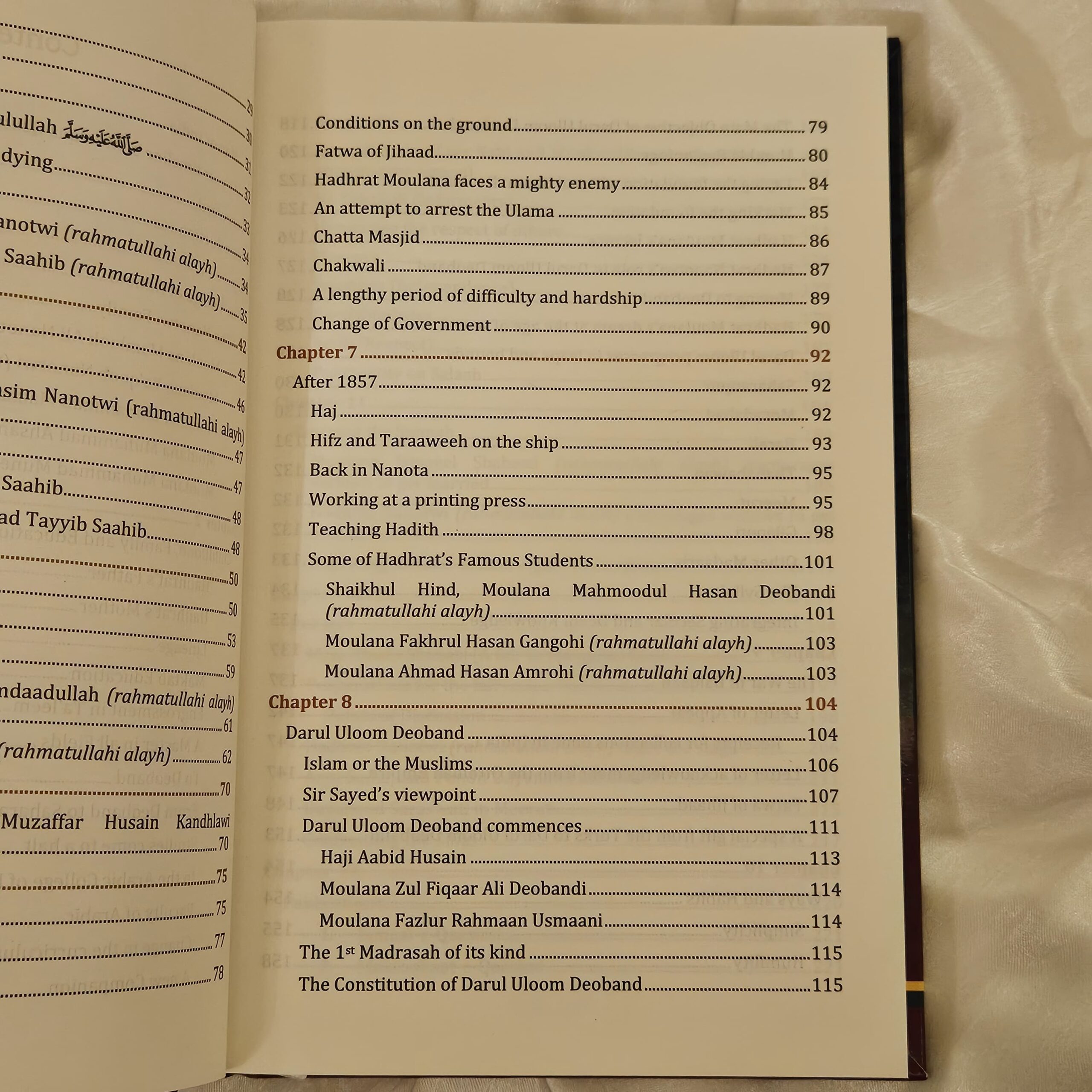
One of his greatest achievements was laying the foundation for Islamic institutions based on public funding rather than state or elite patronage. He clearly outlined principles emphasizing reliance on Allah, independence from government influence, and collective public support. These principles ensured the survival, integrity, and global impact of Darul Uloom Deoband. In his lifetime, he founded or helped establish four major institutions, with Deoband becoming his primary focus and lasting legacy.
Maulana Nanawtawi also played a leading role in resisting British ideological and religious threats. He confronted military aggression, intellectual challenges, and divisive strategies employed by colonial powers. His defense of Islam earned respect even among non-Muslims and set a precedent for future scholars to actively counter mischief and falsehood.
In the realm of knowledge, he addressed the intellectual shift brought by Western education by emphasizing the wisdom and reasoning behind Islamic laws. Like Shah Waliullah (rahimahu Allah), he explained the underlying purposes of Shariʿah, but he went further by systematically addressing matters of belief and making complex rational arguments accessible. His works reflect inspired knowledge, depth of insight, and originality.
Among his notable students were Shaykh al-Hind Maulana Mahmud Hasan Deobandi, Maulana Fakhr al-Hasan Ghangohi, and Maulana Ahmad Hasan Amrohawi (rahimahumu Allah). Through them and countless others, his legacy continues to illuminate the path of Islamic scholarship and reform.
Only logged in customers who have purchased this product may leave a review.
request a call back
Reviews
There are no reviews yet.