
Assalamu alaikum wa rahmatULLAHI wa barakatuhu
Welcome to Yusufi Publishers
Discover the Light within the Pages: Your Gateway to Islamic Wisdom...
🚚 Free delivery all over India on all orders above ₹1500/-
Assalamu alaikum wa rahmatULLAHI wa barakatuhu
Welcome to Yusufi Publishers
Discover the Light within the Pages: Your Gateway to Islamic Wisdom...
🚚 Free delivery all over India on all orders above ₹1500/-
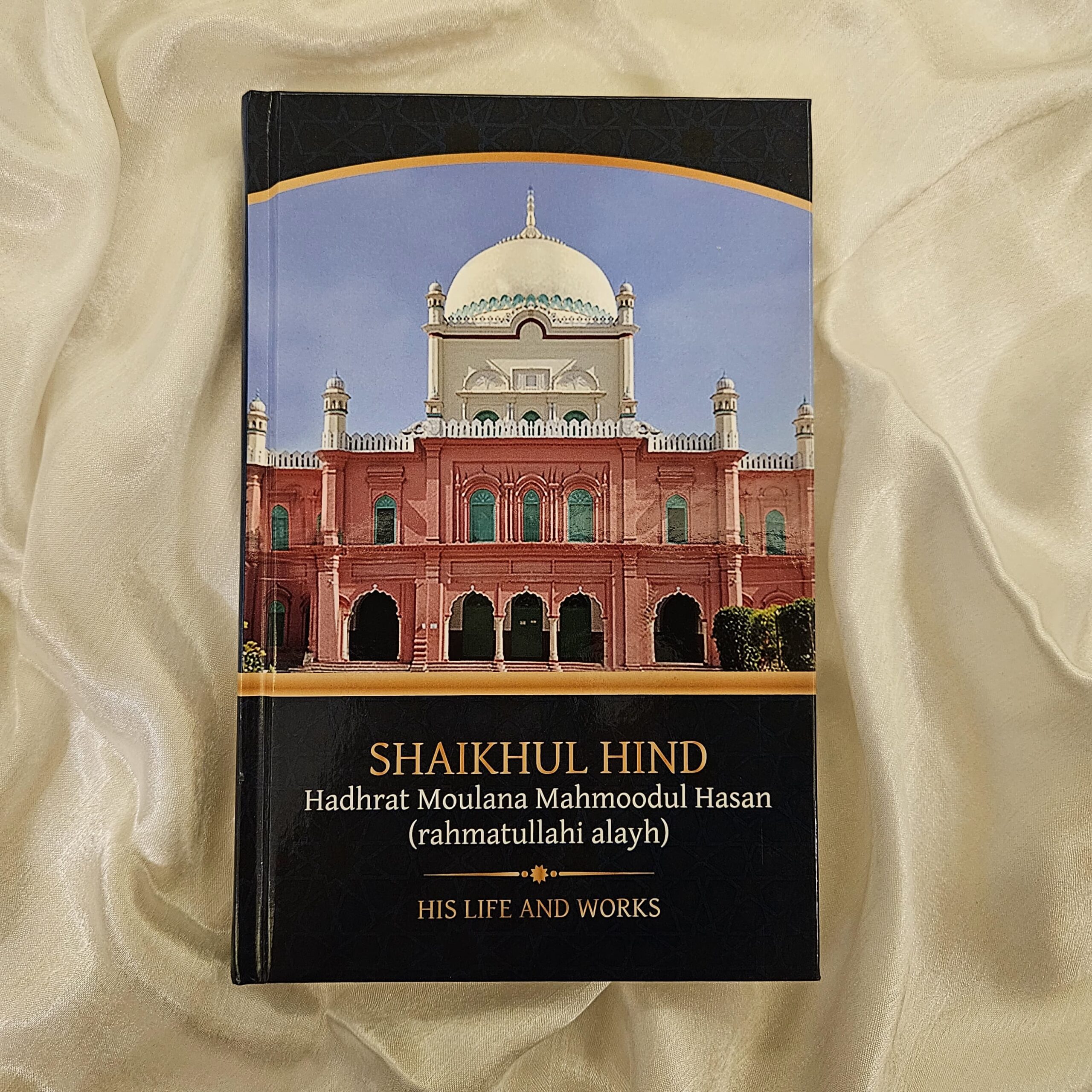
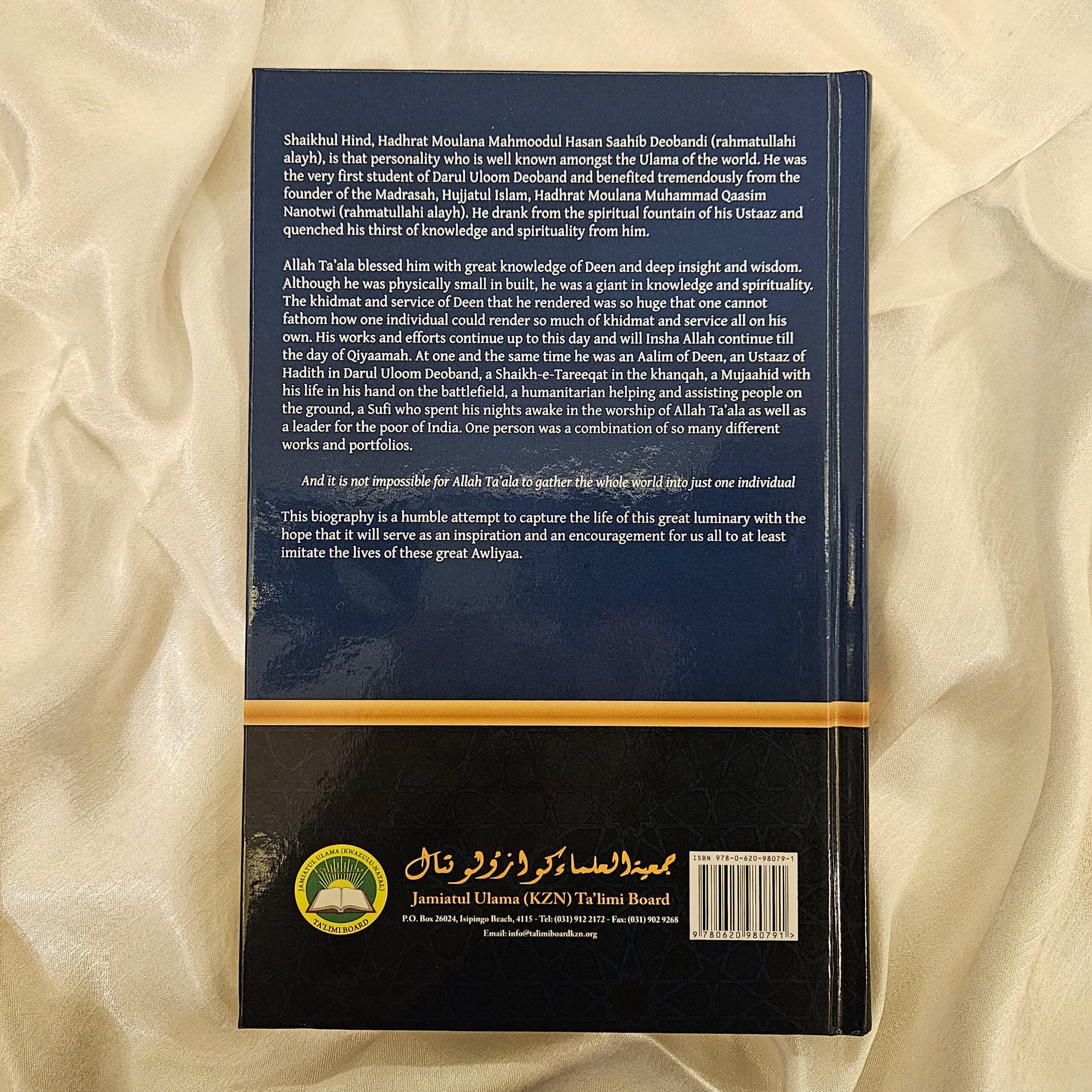
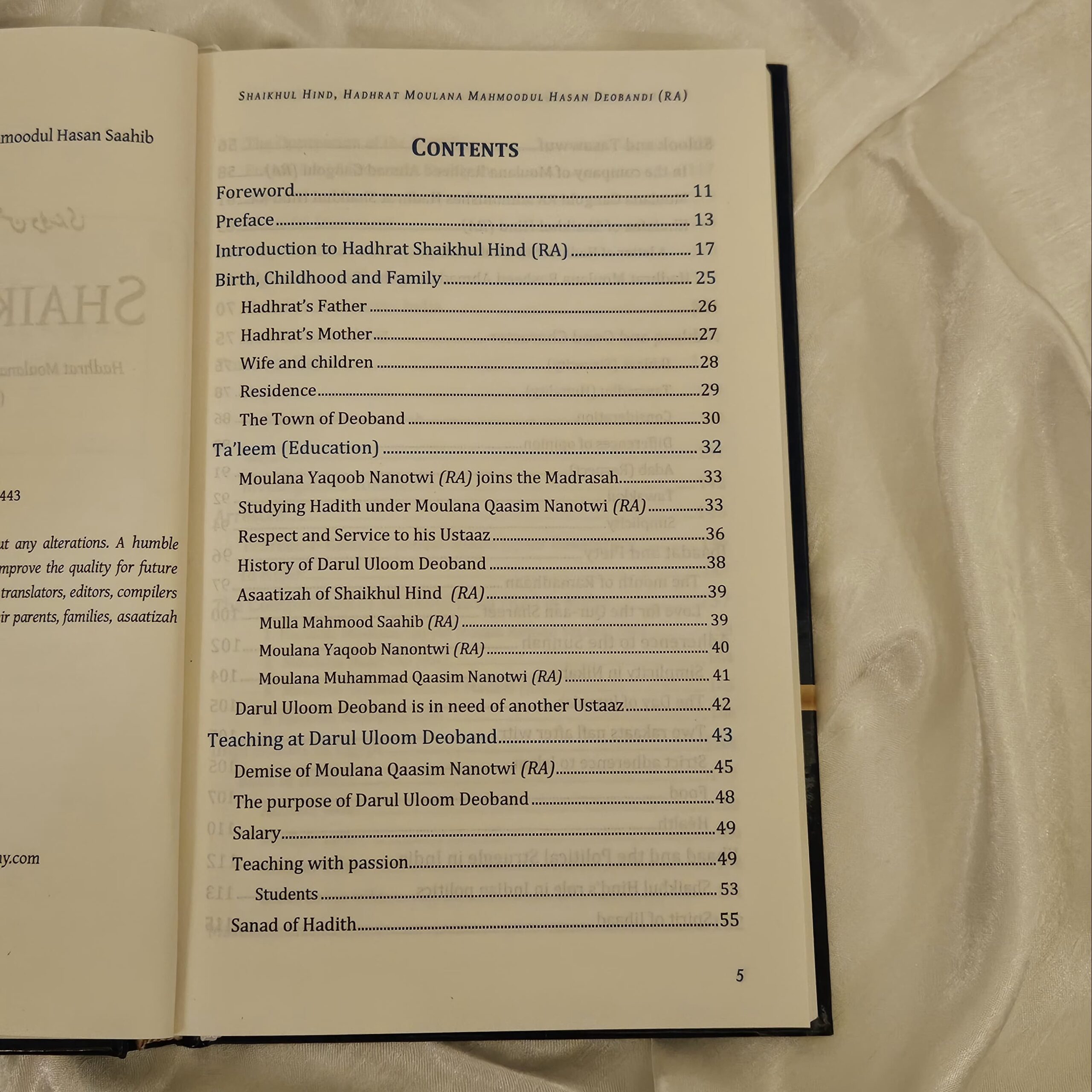
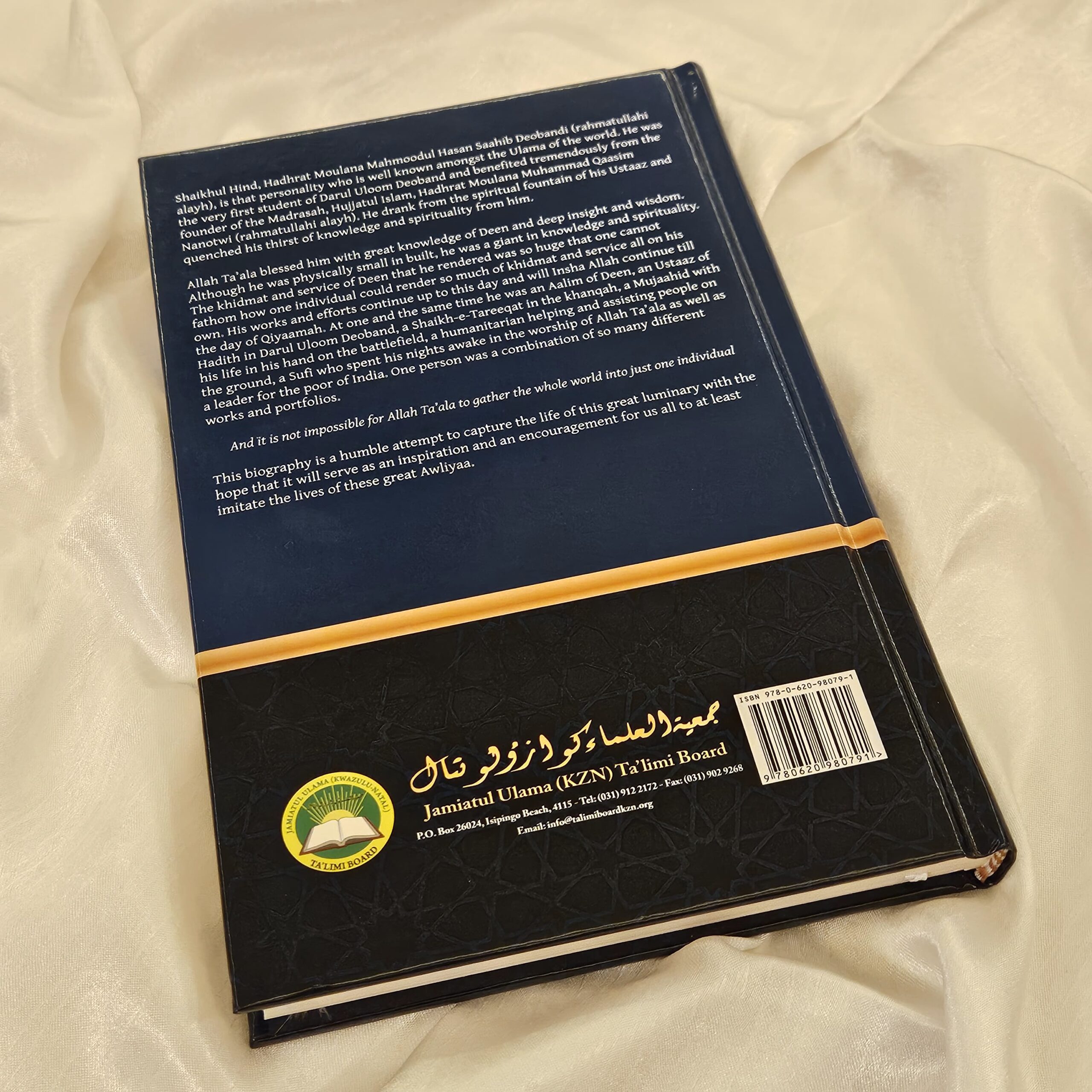
Shaykh al-Hind Maulana Mahmud Hasan Deobandi was a towering Islamic scholar, teacher, and freedom activist whose influence shaped both religious thought and anti-colonial resistance in India. Renowned for his scholarship, leadership, and political vision, he played a pivotal role in the Indian Independence Movement while also nurturing generations of scholars through Darul Uloom Deoband. His lifelong struggle against British rule, most notably through the Silk Letter Movement, earned him lasting recognition as “Shaykh al-Hind” (The Leader of India).
₹300.00
In stock
Shaykh al-Hind Maulana Mahmud Hasan Deobandi (1851–1920)
Shaykh al-Hind Maulana Mahmud Hasan Deobandi was a towering Islamic scholar, teacher, and freedom activist whose influence shaped both religious thought and anti-colonial resistance in India. Renowned for his scholarship, leadership, and political vision, he played a pivotal role in the Indian Independence Movement while also nurturing generations of scholars through Darul Uloom Deoband. His lifelong struggle against British rule, most notably through the Silk Letter Movement, earned him lasting recognition as “Shaykh al-Hind” (The Leader of India).
Born in 1851 in Bareilly into the distinguished Usmani family of Deoband, Mahmud Hasan was raised in an environment steeped in learning and reform. His father, Zulfiqar Ali Deobandi, was a co-founder of Darul Uloom Deoband and an accomplished educator. During the upheaval of the 1857 War of Independence, his family relocated to Deoband, where his intellectual journey truly began. He studied the Qur’an, Persian, and Arabic under prominent scholars including his uncle Mahtab Ali Deobandi. He later became the first student of Darul Uloom Deoband, an institution that would define his life’s mission.
Mahmud Hasan completed his formal studies in 1869 and pursued advanced Hadith studies under Maulana Muhammad Qasim Nanawtawi, one of Deoband’s founders. He graduated in 1872 and received the turban of honor in the seminary’s first convocation. Alongside academic excellence, he received spiritual training and authorization in Sufism from Haji Imdadullah Muhajir Makki and Maulana Rashid Ahmad Gangohi, blending inner reform with outward service.
In 1873, he was appointed as a teacher at Darul Uloom Deoband and rose to become its principal in 1890. For him, Deoband was not merely an educational institution but a response to the Muslim decline following the failure of the 1857 uprising. Under his leadership, Deoband emerged as a center for intellectual revival and political consciousness. He established organizations such as Thamratut-Tarbiyat, Jamiatul Ansar, and later Nizaratul Maʿarif al-Qurʾaniyyah, aimed at training scholars and engaging Western-educated Muslims through reasoned Qur’anic teaching.
A prolific scholar, Shaykh al-Hind authored and supervised numerous works. He translated the Qur’an into Urdu, wrote important treatises such as Adilla-e-Kamilah and Izah al-Adillah, and copyedited Sunan Abu Dawud. As a Hadith teacher, his influence was immense, producing students who later became leaders of Islamic scholarship, including Ashraf Ali Thanwi, Anwar Shah Kashmiri, Hussain Ahmad Madani, Shabbir Ahmad Usmani, Kifayatullah Dehlawi, and Ubaidullah Sindhi.
Beyond academia, Mahmud Hasan was a resolute opponent of British colonial rule. Believing that foreign domination threatened both Islam and Indian society, he devised a bold strategy to overthrow British power. This culminated in the Silk Letter Movement (Reshmi Rumal Tehrik), a clandestine plan to coordinate an armed uprising with support from Afghanistan, the Ottoman Empire, and Germany. His students and associates spread the movement’s message across India and the frontier regions.
In 1915, he traveled to Hejaz to secure Ottoman and Turkish support but was ultimately betrayed. In 1916, he was arrested in Mecca by Sharif Hussain and handed over to the British, who imprisoned him in Malta. His imprisonment severely affected his health, yet enhanced his stature as a symbol of resistance.
Released in 1920, Shaykh al-Hind returned to India to a hero’s welcome. He was formally honored with the title “Shaykh al-Hind” by the Khilafat Committee. Despite frailty, he threw himself into the Khilafat and Non-Cooperation movements, issuing religious edicts urging Muslims to boycott British institutions, goods, and employment. His fatwa led to mass withdrawals from government-backed colleges and strengthened the freedom struggle.
He also played a foundational role in establishing Jamia Millia Islamia, alongside Muhammad Ali Jauhar and Hakim Ajmal Khan, as an alternative to British-influenced education. Although too weak to speak publicly, his vision guided the institution’s ideals of independent, ethical education.
In November 1920, he presided over the second general meeting of the Jamiat Ulema-e-Hind, advocating Hindu-Muslim unity as essential for independence. Shortly thereafter, on 30 November 1920, Shaykh al-Hind Maulana Mahmud Hasan passed away.
His legacy lives on through his institutions, writings, and thousands of students who shaped religious, political, and educational life across South Asia. He remains a symbol of principled scholarship, courageous resistance, and unwavering dedication to Islam and freedom.
Only logged in customers who have purchased this product may leave a review.
request a call back
Reviews
There are no reviews yet.